The best storage facility is the one that fits what you are storing, how often you will visit and how long you will stay, at a total monthly cost you can verify before you sign. Location, security, unit type and size, lease terms and insurance matter most. Most of them you can check in one visit or one phone call.
Below is the order we would work through, whether you are moving, renovating, clearing out a dorm for the summer or storing business inventory. If you are in or around South San Antonio, we point out what to ask us too, because a good facility should welcome the same questions.
TL;DR
- Start with the items and the timeline, not the price. What you store and how long decides unit type, size and whether you need climate control.
- Choose a facility you can reach easily. Drive time, gate hours and drive-up access matter more than a small rate difference if you will visit often.
- Judge security by what you can see and verify: gated entry, working cameras, lighting, and how long footage is kept.
- Compare total monthly cost: rent, fees, insurance and any rate changes after the first months, not the headline rate.
- Read the lease and get your insurance coverage in writing before move-in day.
Table of Contents
- Start with what you are storing and for how long
- Check the location and access hours
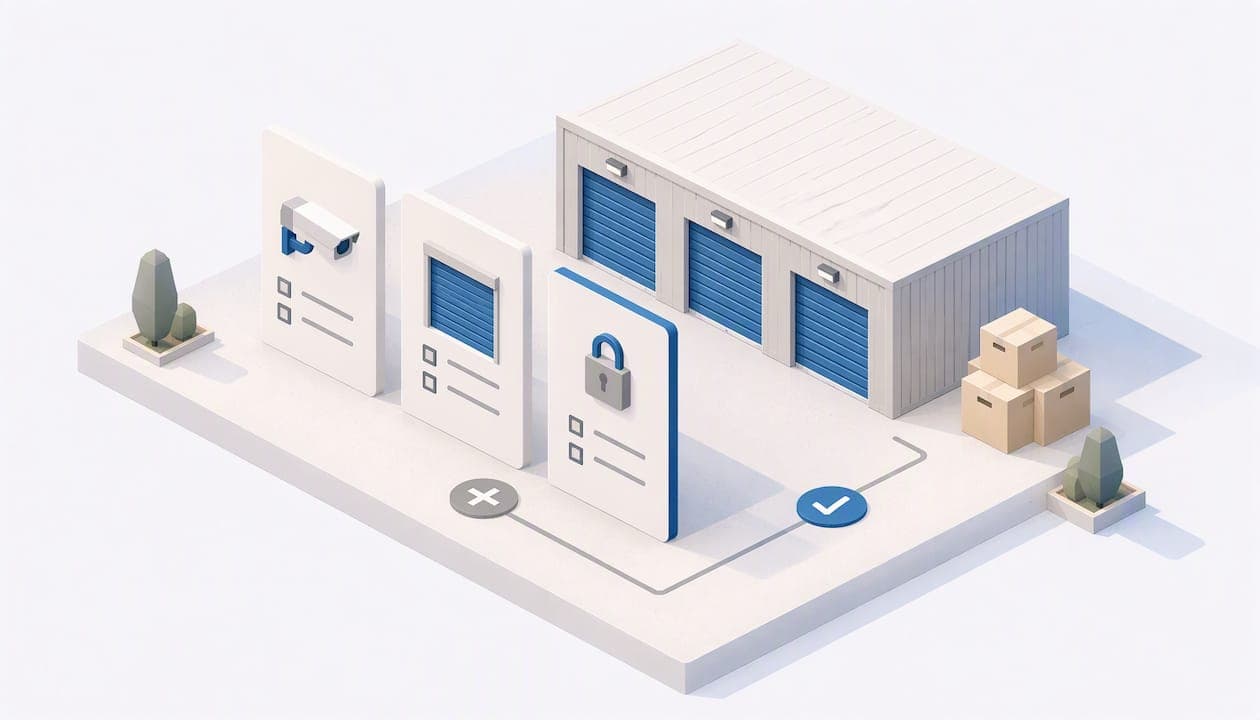
- Look at security the way an inspector would
- Match the unit type to your belongings
- Pick the right size without overpaying
- Compare the total cost, not the headline rate
- Read the lease and sort out insurance before move-in
- Look at cleanliness, upkeep and the people
- Prepare your move so the unit works for you
- Our perspective: what we would check if we were renting
- Renting with Inline Storage in South San Antonio
- A one-page checklist for your visit
- FAQ
- Sources
Start with what you are storing and for how long
Before you open a single listing, write down three things: what is going in, how long it will stay and how often you will come back.
A short stay of a few weeks between a move-out and a closing date is a different job from eight months of summer storage for a college student, and both differ from a small business keeping seasonal inventory it pulls from every week. The first two favor flexibility and easy online renting. The third favors a ground-level, drive-up unit near your route.
A quick sort helps:
| Your situation | What matters most |
|---|---|
| Relocating, short term | Month-to-month terms, fast online rental, a size you can pick on the first try |
| Renovating or decluttering | Easy loading, enough space for furniture, possibly climate control for wood and electronics |
| New homeowner between closings | Flexible start and end dates, drive-up access for a truck |
| College student, summer | Small unit, low commitment, simple move-out |
| Small business | Frequent access, shelving room, a hallway you can walk |
| RV, boat or trailer | Vehicle space with secure entry, enough clearance and turning room |
If you are unsure how long you will need the space, treat month-to-month flexibility as a requirement, not a perk.
Check the location and access hours
A facility ten minutes closer is a facility you will actually use. Drive the route you would take with a loaded truck, not just the one on your map app. Note the turns, the traffic and how easy it is to get a vehicle through the gate.
Then ask about access:
- Gate hours. Some facilities limit when you can enter the property, others allow a wider window. Ask for the exact hours, not a general promise.
- Office hours versus access hours. They are often different. If you work days, you may need after-hours access to your unit or a way to handle paperwork when the office is closed.
- Self-service options. A 24-hour kiosk lets you handle a rental or payment outside office hours. At Inline Storage, our 24/7 contactless kiosk is there for exactly that.
- Distance from your daily route. If you will visit weekly, a 25-minute detour adds up quickly.
A location near a dense urban core can cost more than one a little farther out, so compare a few facilities within a reasonable drive rather than only the nearest.
Look at security the way an inspector would
Every facility claims to be secure. The difference is what you can see, test and get answers about.
Walk the property and look for:
- Controlled entry. A gate that closes behind vehicles, with a code or credential tied to you.
- Cameras that cover the right places. Gate, driveways and unit corridors or rows, not just the office door. Ask whether they are monitored live or only recorded.
- Lighting. Visit once in the evening if you can. Dark corners are a warning sign.
- Condition of doors and locks. Rust, dents and doors that do not sit flush suggest neglect.
- Footage retention. Ask how many days of video are kept and how you would request it if something goes missing.
We wrote a renter checklist for verifying security and footage that goes deeper on that last point. Inline Storage has gated entry and video surveillance, and we are happy to walk you through what is covered when you visit.
Your own lock matters too. A sturdy lock on a well-lit, camera-covered row beats a flimsy lock anywhere.

Match the unit type to your belongings
There are a few common formats, and the right one saves you effort every time you load or retrieve something.
- Indoor units. Reached through a building corridor. They add shelter from weather and can feel more protected, though you will usually be carrying items farther.
- Drive-up units. You park at the door and load directly from your vehicle. They suit heavy furniture, appliances, tools, and anything you will move often. Our guide to drive-up storage sizes for a 1 to 2 bedroom move shows what fits.
- Climate-controlled units. Designed to reduce exposure to extreme temperatures and humidity. Consider these for wood furniture, musical instruments, electronics, photographs, documents and anything that dislikes heat. South Texas summers are hot and humid, so this is a real question here, not an upsell.
- Lockers and small units. For a few boxes, seasonal decor or a student's dorm contents.
- Vehicle spaces. For RVs, boats and trailers. See our overview of outdoor, covered and indoor vehicle storage options.
A simple rule: if it would be unhappy in a closed garage in July, ask about climate control. If you will carry it in and out often, ask for drive-up.
Pick the right size without overpaying
Size mistakes go in two directions. Too small means a second unit or a fight with a stack of boxes. Too big means paying monthly for empty air.
These are practical starting points based on how people commonly use each size. They are not guarantees, since boxes, furniture and stacking habits vary:
| Unit size | Typical use |
|---|---|
| 5x5 and lockers | Boxes, small furniture, seasonal items, a student's belongings. See what fits in a 5x5 |
| 5x10 | The contents of a small apartment's closets and extras. See small apartment storage |
| 10x10 | A bedroom or a small living room's worth of furniture and boxes |
| 10x15 | Larger apartment or a small house's main pieces |
| 10x20 and 10x30 | A multi-bedroom household, business inventory, or a vehicle plus items |
If you are deciding between two neighbors in that list, our comparison of 10x10 versus 10x20 for furniture storage walks through the trade-offs.
A quick way to estimate
- List your large items first: sofa, mattress, dresser, table, appliances.
- Count boxes and group them by size.
- Decide whether you want a walkway. If you will visit, plan to leave one.
- Stack boxes up to a safe, stable height, and place heavier ones at the bottom.
- Then ask the facility to show you the unit size in person or on a floor plan, and compare it against a room you know, such as a 10x10 bedroom.
We publish individual pages for larger sizes such as 10x15, 10x20 and 10x30 units, so you can see how each is described before you call.
Compare the total cost, not the headline rate
The advertised rate is the start of the price, not the end. When you compare facilities, ask each of them the same list of questions and write the answers down:
- What is the monthly rent for this exact unit size and type?
- Is that a promotional rate, and for how many months?
- What will the rate be after the promotion ends?
- Is there an administrative or setup fee?
- Is a deposit required?
- Is a lock sold on site, or do I bring my own?
- Is insurance required, and what does the facility's protection plan cost?
- What are the late fees and when do they start?
- How much notice do I need to give to move out?
Put them side by side in a simple table, with one column per facility and one row per question. A cheaper first month can easily be erased by a fee or a rate increase, so compare what you would pay across the first six months. That one exercise shows the real difference between two offers faster than any review.
It is also worth asking whether the facility prorates the last month or bills on a fixed date each month, since that changes your cost on a short stay.
Read the lease and sort out insurance before move-in
A storage rental is a contract, and it is worth five minutes of your attention. Look for:
- Term. Month-to-month or a fixed commitment.
- Notice to vacate. How and when you must tell the facility you are leaving.
- Rate changes. Whether and how the rent can change during your stay.
- Late payment and default terms. What happens if you miss a payment, and how you are notified.
- What may not be stored. Hazardous, flammable or perishable items are typically prohibited. Ask for the list.
- Liability language. Many leases limit the facility's responsibility for your belongings, which is why insurance matters.
On insurance, do not assume. Some homeowners and renters policies cover belongings in storage only up to a limit, sometimes a fraction of what they cover at home. Call your insurer and ask specifically about an off-premises limit for property in a storage unit, and ask for the answer in writing. Our post on getting your off-premises limit in writing explains what to ask. If your policy does not cover enough, ask the facility about its protection plan or a separate storage policy, and compare the cost and the coverage terms.
If an insurance or protection plan is bundled with your rental, ask for it to be itemized so you can see what you are paying for and decline anything that duplicates your own coverage where the lease allows.
Look at cleanliness, upkeep and the people
You learn a lot from small things on a walkthrough:
- Are the driveways and corridors clean and free of debris?
- Are doors, lights and gates working?
- Is there any sign of leaks, pests or standing water near the units?
- Are carts or dollies available, and in good shape?
- When you ask a question, does the manager answer clearly or dodge?
Then check reviews, but read them for patterns. One angry review is noise. Ten that mention the same issue, such as surprise fees, billing errors or a gate that is often broken, is a signal. Pay attention to how the facility replies, since a calm, specific response tells you how they will treat you after you have signed.
Prepare your move so the unit works for you
Once you have chosen, a little preparation makes the facility easier to use:
- Make an inventory. A simple list with photos of valuable items helps for insurance too.
- Label boxes on the sides, not the tops, so you can read them when they are stacked.
- Put items you may need soon near the door. Leave a walkway if you expect to visit.
- Protect furniture. Use covers, keep mattresses upright or flat on a pallet-like base off the floor, and empty and dry appliances.
- Ask about carts or dollies ahead of time, and bring your own if you are unsure.
- Bring a good lock and keep a record of your unit number and gate code somewhere safe.
Our perspective: what we would check if we were renting
We run a facility, so we have heard every question and seen the mistakes people make. The most common one is choosing on price alone and then discovering the unit is hard to reach, too small or missing something they assumed was included.
Our advice is to decide three things first: unit type, size and how flexible you need to be. Then visit, even if you plan to rent online. Look at the gate, the cameras, the lighting and the row your unit would be on. Ask about every fee in plain words. A facility that is confident in what it offers does not mind that.
We built Inline Storage around ease: month-to-month leases, a range of unit sizes from lockers to 10x30, climate-controlled options, drive-up access, gated entry and video surveillance, and Touchless Rentals™ so you can rent online with minimal physical interaction. We also have ADA storage spaces and space for RVs and boats. We think those are the things a renter in South San Antonio should be able to find in one place.
— Ian
Renting with Inline Storage in South San Antonio
If you are in the South San Antonio area, you can browse our storage lockers and units from 5x5 to 10x30 and start your rental online with Touchless Rentals™. Need a vehicle space? We have RV storage and boat storage. For current rates and availability, check our website, since prices vary by unit size and type.
Running a small business? Our business storage checklist covers what to look for in a unit used for inventory.
A one-page checklist for your visit
Print or screenshot this and take it with you:
- Unit type and size confirmed, with a floor plan or a look at the actual unit
- Monthly rent, promotional period and post-promotion rate in writing
- All fees listed: admin, deposit, lock, insurance, late
- Gate hours and office hours
- Gate, cameras and lighting checked in person
- Footage retention period asked about
- Lease term, notice and rate-change language read
- Your own insurance limit for off-premises property confirmed in writing
- Prohibited items list received
- Carts or dollies available
- Clean, well-kept property and a manager who answers directly
FAQ
How do I know if a storage facility is good?
Look for things you can verify: a gated entry, working cameras and lights, clean and well-maintained grounds, clear written pricing and a manager who answers fee questions directly. Reviews that repeat the same complaint about billing or security tell you more than any single rating.
How much storage space do I need?
List your large furniture and count your boxes, then decide whether you want a walkway to reach items. A locker or 5x5 suits a few boxes and small items, a 5x10 a small apartment's extras, and 10x10 or larger a bedroom or more of furniture. Ask the facility to show you the real unit before you commit.
Do I need climate-controlled storage?
Consider it for wood furniture, electronics, instruments, photos, documents and anything sensitive to heat and humidity. For sturdy items such as tools, plastic bins and outdoor gear, a standard unit is often enough. If you are unsure, tell the facility what you are storing and ask for their recommendation.
Is renting a storage unit online safe?
It can be, when the facility is clear about the unit, the price, the lease terms and the fees before you pay. Read the lease, confirm the total monthly cost and ask any questions by phone first if something is unclear. Our Touchless Rentals™ lets you rent online with minimal physical interaction, and you can still visit the property first.
Sources
- Are storage units safe? A renter checklist
- Storage unit insurance and your off-premises limit
- Drive-up storage sizes for a 1 to 2 bedroom move
- Vehicle storage options