
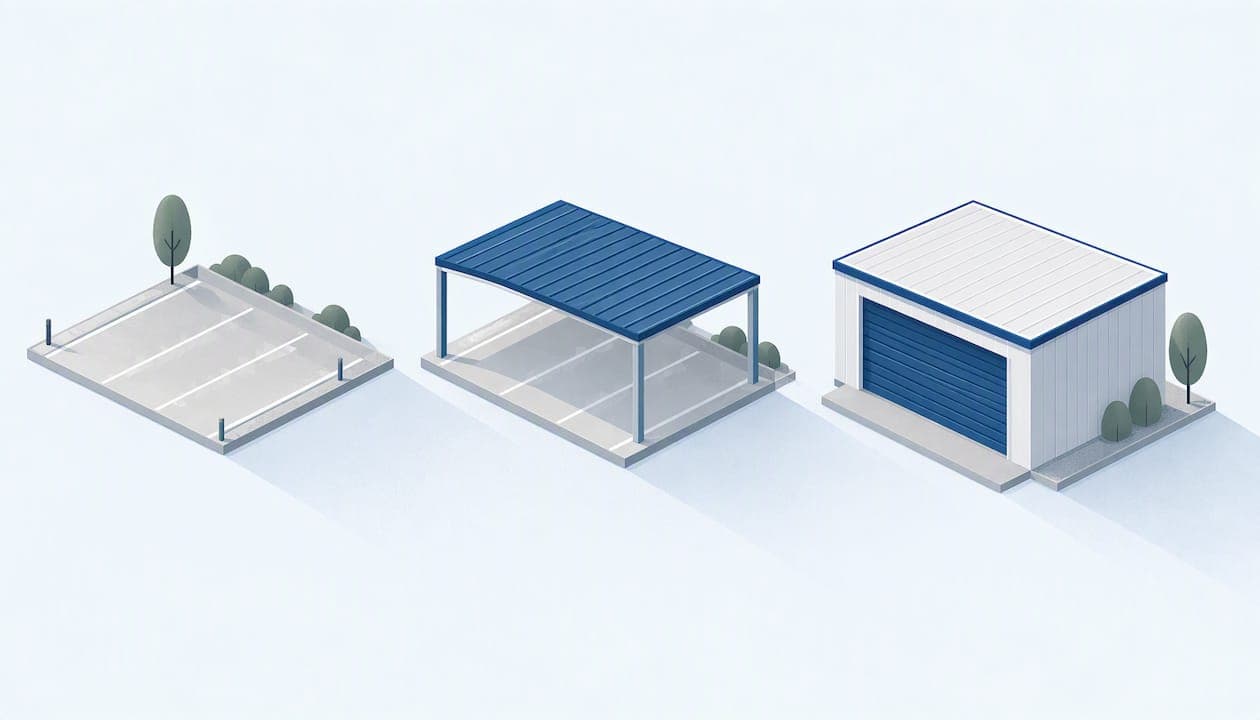
You have three basic choices for storing a vehicle: an outdoor parking space, a covered space, or an enclosed indoor unit. Outdoor costs the least and protects the least. Indoor costs the most and protects the most. Which one is right depends on what you are storing, how long it will sit, and how much sun, hail and risk you are willing to leave it exposed to in South Texas.
This guide walks through each option for cars, motorcycles, RVs and boats. It covers what storage costs, how to prepare a vehicle so it starts when you come back, and what to check before you sign a lease. We run a self-storage facility in South San Antonio, so we also say where our own options fit.
TL;DR
- Vehicle storage comes in three tiers: outdoor (cheapest), covered (middle) and enclosed indoor (most protective, best for long stays).
- Match the tier to the vehicle. A daily-driver spare can sit outside. A classic car, a motorcycle or anything you would hate to see hail-pitted belongs indoors.
- Prep matters as much as the space: fuel stabilizer, a battery maintainer, correct tire pressure and a call to your insurer.
- Read the lease for rules on fuel, batteries and working on the vehicle, and confirm the facility has gated access and video surveillance.
- Inline Storage offers drive-up units, climate-controlled units, RV storage and boat storage in South San Antonio, with month-to-month leases and Touchless Rentals™.
Table of Contents
- The three tiers of vehicle storage
- Which vehicle goes where
- What vehicle storage costs
- Is it legal to store a car in a storage unit?
- How to prepare a vehicle for storage
- Insurance and registration while stored
- What to check before you rent
- Our perspective
- Renting vehicle storage with Inline Storage
- FAQ
- Sources
The three tiers of vehicle storage
Most facilities sort vehicle storage into the same three levels. Outdoor storage is the most affordable, covered storage gives moderate protection, and indoor storage gives the highest level. Here is how they compare in practice.
| Option | Protection | Relative cost | Best for |
|---|---|---|---|
| Outdoor parking space | Security features only, no shelter from sun, rain or hail | Lowest | Short stays, work trucks, older vehicles, RVs and boats in the off-season |
| Covered parking | Roof overhead, open sides | Middle | Daily drivers, RVs and boats where sun and hail are the main worry |
| Enclosed drive-up unit | Walls, a door and a lock | Higher | Cars, motorcycles, classics, trailers, small boats |
| Enclosed climate-controlled unit | Walls, door and temperature moderation | Highest | Collector cars, long-term storage, vehicles with leather and electronics |
Outdoor parking
An open space in a fenced, gated lot is the budget answer. Your vehicle faces UV, rain and hail, so it suits vehicles that are already weathered or tough, or storage that will last weeks rather than a full year. In San Antonio, where summer sun is intense and hail is a regular spring risk, open parking works best when paired with a good cover and comprehensive insurance.
Covered parking
A roof removes the worst of the sun and most hail exposure at a modest premium. For RVs and boats, which are too tall or long for most enclosed units, covered or open parking is often the practical choice. We cover those two in more detail below.

Enclosed indoor units
A drive-up unit keeps a vehicle out of sight, out of the weather and behind your own lock. This is the tier most owners of motorcycles, project cars and classics choose. If a vehicle is valuable, sentimental or going to sit for many months, enclosed storage is usually worth the added rent.
Climate-controlled storage
Texas heat accelerates the aging of rubber, plastics, adhesives and interiors. Climate-controlled storage is increasingly popular with owners who want to preserve a car for the long term. It is the premium choice for collectors and for anyone storing a vehicle through multiple summers.
Which vehicle goes where
Cars
For a spare car, a student's car over the summer or a vehicle you will not drive during a move, outdoor or covered parking is usually enough. For a classic, a convertible or a high-value car, go enclosed. A 10x20 unit is the size most people start with for a standard car, and a 10x30 gives more room for a larger vehicle or a car plus tools and spare parts. Measure your vehicle, including mirrors, and confirm the fit with the facility before you commit.
Motorcycles
Motorcycles are the easy one. They fit in modest units, and many riders share a unit with other belongings. Typical motorcycle storage runs about $20 to $60 a month outdoors, $40 to $100 covered and $40 to $150 or more indoors, according to Move.org's 2023 figures, so treat those as a ballpark rather than a San Antonio quote. Facilities differ on rules for fuel and fluids, and some leases are strict about them. Our guide to motorcycle storage unit rules that prevent lease denials covers what to check before you move in.

RVs and boats
These are usually too large for a standard unit, so the real choice is open or covered parking. We offer RV storage and boat storage in South San Antonio. If you keep a trailer, ask about turning radius and gate width before the first drop-off.
Project vehicles, ATVs, golf carts and lawn tractors
Smaller vehicles fit well in a drive-up unit. If you are clearing garage space for a mower or yard tools, see our piece on storing lawn equipment without a new shed. If you are storing spare wheels, tire storage keeps them off the concrete.
What vehicle storage costs
Prices swing widely by region, size and tier. Move.org reported an average of about $310 a month for vehicle storage across types in 2023, a figure that blends large RV and enclosed spaces with cheaper outdoor spots. For a car, the price depends mostly on three things:
- Tier. Open parking is cheapest, enclosed climate-controlled is the most expensive.
- Length. A 10x20 costs more than a 10x10 because you are renting more floor space.
- Lease terms. Month-to-month leases cost a little more per month than prepaying, but you can leave when your plans change.
We do not publish a single price for vehicle storage because it depends on the unit or space. The fastest way to see current availability is to browse our self-storage units or check the 10x20 units page.
The cheapest way to store a car
The cheapest legitimate option is usually an outdoor space in a gated lot, ideally with a fitted cover. If you have a driveway or a friend's garage, that is cheaper still, but check your HOA rules and city ordinances first. Cheap becomes expensive if hail or theft damages the car, so weigh the rent saved against your insurance deductible.
Is it legal to store a car in a storage unit?
Generally yes, but the facility sets the rules. Your rental agreement and local facility policies dictate the rules on fuel levels, battery disconnection and maintenance work, according to Nevada's DMV storage guide. The guide is from another state, so use it as a general reference and check Texas requirements with the Texas DMV or your county tax office. Most facilities do not allow oil changes, repairs or engine running inside units, and many require the vehicle to be registered and owned by the renter. Ask for these rules in writing.
How to prepare a vehicle for storage
A stored vehicle still ages. Batteries self-discharge and gasoline begins to degrade within roughly three to six months. The same source says the best prevention is driving the car for 15 to 30 minutes every two weeks, which is rarely possible in a unit. If you cannot, follow these steps.
- Wash and wax. Dirt, bird droppings and tree sap damage paint if left. Clean the interior and remove food.
- Fill the tank and add stabilizer. A full tank limits moisture, and stabilizer slows fuel breakdown. Check your owner's manual for specifics.
- Change the oil if the next service is close. Used oil contains contaminants you do not want sitting in the engine.
- Protect the battery. Use a battery maintainer rather than a trickle charger, which can overcharge and leak acid. The same guide says to remove the battery if the storage area drops below freezing. San Antonio rarely sees long freezes, but check with your facility if a maintainer is allowed, since many units do not offer power.
- Inflate the tires. Slightly above the normal pressure reduces flat spots on a car that sits for months. Do not set the parking brake for long stays, as pads can stick. Use wheel chocks instead.
- Keep pests out. Block the exhaust with steel wool or a plug (and remember to remove it), and seal the interior from rodents.
- Use a breathable cover. Avoid plastic tarps, which trap moisture.
For motorcycles, the same logic applies. Stabilize the fuel, keep the battery on a maintainer, put the bike on a stand if you will store it for months, and keep it off bare concrete damp. Many riders ask about unit size: a 5x10 handles most single motorcycles with room for gear, and a 5x10 unit is a good starting point. Always confirm with the facility, because rules differ.
Insurance and registration while stored
Call your insurer before the vehicle goes into storage. State Farm notes that when a vehicle is stored for 30 days or more, you may be able to suspend liability and collision coverage and keep only comprehensive. Comprehensive covers fire, flood, hail and vandalism. If you still owe on the car, your lender may require both coverages, so check your loan terms.
For stays beyond three months, the Nevada DMV guide suggests checking whether you can cancel registration and insurance to save money. Texas rules are different. Contact the Texas DMV before cancelling anything, because gaps in registration can bring fines.
Also ask where the facility's liability ends. The storage facility's insurance generally does not cover your vehicle, and policies vary on damage. Our article on getting your off-premises limit in writing explains what to ask your insurer.
What to check before you rent
Walk the facility, or at least review it online, and ask the following.
- Security. Look for gated entry, lighting and video surveillance. Our renter checklist on storage security explains how to ask about footage retention.
- Access hours. If you need to get to the vehicle on weekends or evenings, read the access hours options.
- Dimensions and door height. Measure width, length and height. Check the door opening, not just the unit.
- Surface. Concrete or asphalt is fine. Gravel and dirt lots invite mud and rust.
- Lease terms. Look for month-to-month flexibility, late-fee rules and what happens if you stop paying.
- Rules on work and fluids. Ask if you may charge a battery, start the engine or keep fuel on site.
- Accessibility. If you or a family member need an accessible space, see our accessible storage checks.
Our perspective
People usually shop for vehicle storage on price alone, then come back to us after a hailstorm or a dead battery. We think the better question is how long the vehicle will sit and how much you would pay to avoid a repair. For a three-week move, a secure outdoor spot is fine. For a project car or a motorcycle that will wait out the winter, an enclosed unit pays for itself.
We built Inline Storage around ease: gated access, video surveillance, drive-up units, and a kiosk that is open around the clock, so you are not tied to office hours. Our Touchless Rentals™ system lets you reserve and rent online without a visit, which matters when you are in the middle of a move. We keep leases month-to-month because vehicle plans change, whether that is a deployment, a renovation or a car you decide to sell.
One piece of advice we repeat often: measure first, then rent. A unit that is two feet too short is the most common regret we hear about.
— Ian
Renting vehicle storage with Inline Storage
We offer drive-up units from small lockers to 10x30, climate-controlled storage, RV storage and boat storage at one South San Antonio location. Gated entry, video surveillance and ADA storage spaces are part of the facility. You can reserve through the Touchless Rentals™ kiosk or browse all our units online. If you are unsure whether your vehicle fits, tell us the make, model and year, and we will help you choose.
FAQ
How much does it cost to put a car in a storage unit?
It depends on the unit size and tier. Open parking costs the least, and enclosed, climate-controlled units cost the most. Because pricing changes with availability, check current rates for the specific unit you need rather than relying on national averages.
Can I store a car in a storage unit long term?
Yes, if the facility allows vehicles and you follow its rules. For months-long stays, use a fuel stabilizer, a battery maintainer if power rules allow it, proper tire inflation and a breathable cover. Tell your insurer, and ask about keeping comprehensive coverage.
What is the best way to store a motorcycle?
Use an enclosed unit if you can, since it protects against sun, humidity and theft. Stabilize the fuel, maintain the battery and keep the bike upright on a stand. Check the lease first, because facilities differ on fuel and fluid rules.
Should I choose indoor or outdoor vehicle storage?
Choose indoor for classics, collectibles, motorcycles and any stay longer than a few months. Outdoor or covered parking works for short stays, work vehicles and larger RVs and boats that will not fit in a unit. Texas sun and hail make a cover or roof worthwhile either way.
Sources
- FindSelfStorage: car storage units
- Move.org: how to find vehicle storage
- Nevada DMV: vehicle storage guide
- Texas DMV
- AutoReviewUS: what happens to a car that sits for 6 months
- Classic DeLorean Motor Company: long term storage
- State Farm: preparing for long term car storage
- Focus2Move: benefits of climate-controlled car storage