
Renting a business storage unit sized to your inventory or equipment, with drive-up access and solid security, solves most small business space problems without the cost of a warehouse lease. Inline Storage in South San Antonio is worth checking first: month-to-month flexibility, Touchless Rentals™, and video-monitored access cover the basics most business owners need. Check unit sizes and current pricing online, or reserve one in a few minutes.
TL;DR:
- The typical monthly cost for a business storage unit ranges from $40 to $600, depending on size, climate control, and vehicle parking features.
- Sizes vary from 5x5 lockers for documents to 10x30 units suitable for vehicles or large equipment, with matching costs to usage needs.
- Security features like gated entry, video surveillance, and individual alarms are essential, but only effective if properly enforced and monitored.
- Month-to-month leases provide flexibility for seasonal inventory adjustments, while longer contracts may impose penalties for early termination.
- Business owners should verify insurance requirements, access hours, and unit condition during inspections to ensure suitability and avoid unexpected costs.
Table of Contents
- What Types of Business Storage Units Are There?
- How Much Does a Business Storage Unit Cost, and What Size Do I Need?
- How Do I Choose the Right Business Storage Facility?
- Security, Access, and Daily Logistics
- When Does a Storage Unit Make More Sense Than a Warehouse?
- Why We Built a Checklist Instead of a Buying Guide
- Lease Terms: How Flexible Should Your Commitment Be?
- Do You Need Insurance for Stored Business Inventory?
- Loading and Unloading: Doing It Right
- How Inline Storage Fits Into Your Storage Search
- Sources
- FAQ
What Types of Business Storage Units Are There?
Not every business needs the same box. The right type depends on what you're storing, how often you need to reach it, and whether a forklift or a hand truck gets the job done.
Indoor units sit inside a climate-controlled building, accessed through interior hallways. They suit paper records, electronics, and anything sensitive to Texas summers. Drive-up units let you back a truck or van right up to the door, which matters if you're loading and unloading inventory weekly rather than once a year. Outdoor vehicle parking covers RVs, trailers, box trucks, and fleet vehicles that don't need a roof, just a secure lot. Portable containers, the model PODS built its business on, get delivered to your location, loaded on your schedule, then either stored on-site or hauled to a new one. That hybrid setup works well for a contractor staging equipment between job sites.
Amenities matter as much as the unit shape:
- Climate control protects electronics, documents, and inventory sensitive to heat or humidity.
- 24/7 or extended access matters for e-commerce sellers who pack orders at odd hours.
- Gated entry and video surveillance cut theft risk for high-value inventory.
- Drive-up access speeds up loading for anyone moving boxes weekly, not just at move-in.
A boutique retailer storing seasonal stock probably wants climate control and easy access. A landscaping company parking trucks and trailers wants an open lot with good lighting and gate coverage, not a climate-controlled indoor unit that costs more for a feature it doesn't need.
How Much Does a Business Storage Unit Cost, and What Size Do I Need?
Size drives price more than almost anything else, and matching the unit to what you're actually storing keeps you from overpaying for empty space you'll never fill.
- 5x5 (locker-sized): Fits file boxes, a small run of retail inventory, or extra point-of-sale equipment. Think of it as an overflow filing cabinet.
- 5x10: Holds seasonal displays, a few pallets of stock, or a contractor's spare tools and materials.
- 10x10: Comparable to a small one-car garage. Common for e-commerce sellers with moderate SKU counts or a trade business storing ladders, generators, and job-site gear.
- 10x15: Fits furniture inventory, a small fleet of hand trucks and dollies, or overflow stock for a growing retail operation.
- 10x20 to 10x30: Room for a vehicle, a large equipment cache, or enough retail inventory to run a full seasonal rotation.
Price shifts based on size, whether the unit is climate-controlled, whether it includes vehicle parking, and how tight the local market is. Published rate guides show business storage running roughly $40 to $600 a month depending on those factors, with climate control and larger footprints pushing costs toward the top of that range.
Here's a rough monthly budget for a small online retailer: a 10x15 unit for inventory, a modest contents insurance policy, and no added access fees lands most sellers in a predictable, manageable monthly range well below what a shared warehouse bay would cost. Get an exact number by pulling current rates for your market before you commit to a size.
How Do I Choose the Right Business Storage Facility?
Skip the guesswork. Walk in (or call) with this checklist and you'll know within ten minutes whether a facility fits.
Confirm these before signing anything:
- Security infrastructure: gated access, video surveillance, and individual unit alarms if theft risk is a concern.
- Access hours: does the facility offer 24/7 access, or is it limited to business hours that conflict with your operation?
- Unit condition: check for water stains, pest evidence, or door damage before you sign.
- Insurance requirements: does the facility require proof of coverage, or offer its own protection plan?
- Lease flexibility: month-to-month versus a locked annual term, and what penalties apply for early termination.
- Pricing transparency: published rates online versus "call for a quote," which often signals negotiable but inconsistent pricing.
Ask these questions directly on your call or tour:
- What are your access hours, and is there a holiday exception?
- How is the property monitored, and who reviews footage if something goes missing?
- Is renter's insurance mandatory, or can I use my own business policy?
- Do you accept deliveries or carrier drop-offs on my behalf?
- Are there discounts for signing a longer lease or paying multiple months upfront?
- What's the penalty structure if I need to leave early?
Red flags worth walking away from: no visible cameras, gate codes that never change, and staff who can't tell you how long footage is retained.
Pro Tip: Ask specifically how many days of camera footage the facility retains before it overwrites. Thirty days of storage is common, but some budget facilities only keep a week, which won't help if you discover a loss after a trip out of town.
Security, Access, and Daily Logistics
Security features only help if they're actually enforced. A gate code shared by fifty tenants and never rotated does less for you than a single camera aimed at the loading area. Look for individually alarmed units, adequate lighting after dark, and on-site staff or a monitored kiosk rather than a facility that relies purely on signage.
Access logistics decide whether the unit actually fits your workflow:
- Confirm clearance height if you're storing a box truck, trailer, or RV.
- Ask whether drive-up bays are first-come, first-served or reservable during peak hours.
- Check whether the facility accepts carrier deliveries when you're not on-site.
For day-to-day organization, treat the unit like a small warehouse: group inventory by SKU or job, label boxes on the side facing the aisle, and leave a walkway down the center so you're not unstacking pallets to find one item.
When Does a Storage Unit Make More Sense Than a Warehouse?
A few common scenarios show where a unit earns its keep. An e-commerce seller with seasonal overflow avoids a 12-month warehouse lease by renting a 10x15 for peak months only. A contractor stages tools and materials near a job site instead of hauling them back to a shop daily. A retailer archives old records and displays instead of paying office rent for storage space.
For pure digital backup rather than physical goods, cloud options like Amazon S3 or lower-cost alternatives like Backblaze B2 handle documents and data more cheaply than any physical unit. Once inventory outgrows a few units consistently, or you need dock-height loading and pallet racking, that's the signal to look at small warehousing or a 3PL instead.
Why We Built a Checklist Instead of a Buying Guide
Most storage articles walk you through generic tips and leave the actual decision to guesswork. What the research behind this piece actually supports is narrower: pick the unit type and size based on your specific use case first, then filter facilities by security and access, and only then compare price. Businesses that shop price first often end up with a unit too small or too far from where they load and unload daily.
Inline Storage's own facility features map cleanly onto that priority order. Touchless Rentals™ solves the access-friction problem for owners who don't have time for an office visit. Video surveillance and gated entry cover the security checklist. Pricing details are available on the provider's website to avoid uncertainty. That's the practical value: fewer unknowns before you commit.
— Ian
Lease Terms: How Flexible Should Your Commitment Be?
Most business storage facilities offer month-to-month leases as the default, which matters if your inventory needs shift with seasons or growth. A month-to-month term lets you scale up during a busy quarter and drop down, or walk away entirely, without waiting out a fixed contract.
Longer leases sometimes come with a modest rate discount, but they carry a real tradeoff: early termination penalties or forfeited deposits if your business needs change faster than expected. Before signing anything longer than three months, ask specifically what happens if you need to vacate early, and whether a rate lock survives a renewal.
Renewal policies deserve the same scrutiny as the initial lease. Some facilities auto-renew at a higher rate unless you give written notice by a specific date. Others hold your rate steady as long as you don't miss a payment cycle. Get the renewal terms in writing, not just verbally confirmed by staff, since verbal promises rarely hold up if a dispute comes later.
For most small businesses managing inventory that fluctuates seasonally, a month-to-month lease with no long-term commitment is the safer default. It costs a little more per month in some markets, but it buys you the freedom to resize or relocate without a penalty clock running against you.
Do You Need Insurance for Stored Business Inventory?
Most facilities require proof of insurance before you move anything in, and for good reason. A facility's own liability coverage typically protects the building, not your goods inside it, which leaves your inventory exposed unless you carry separate coverage.
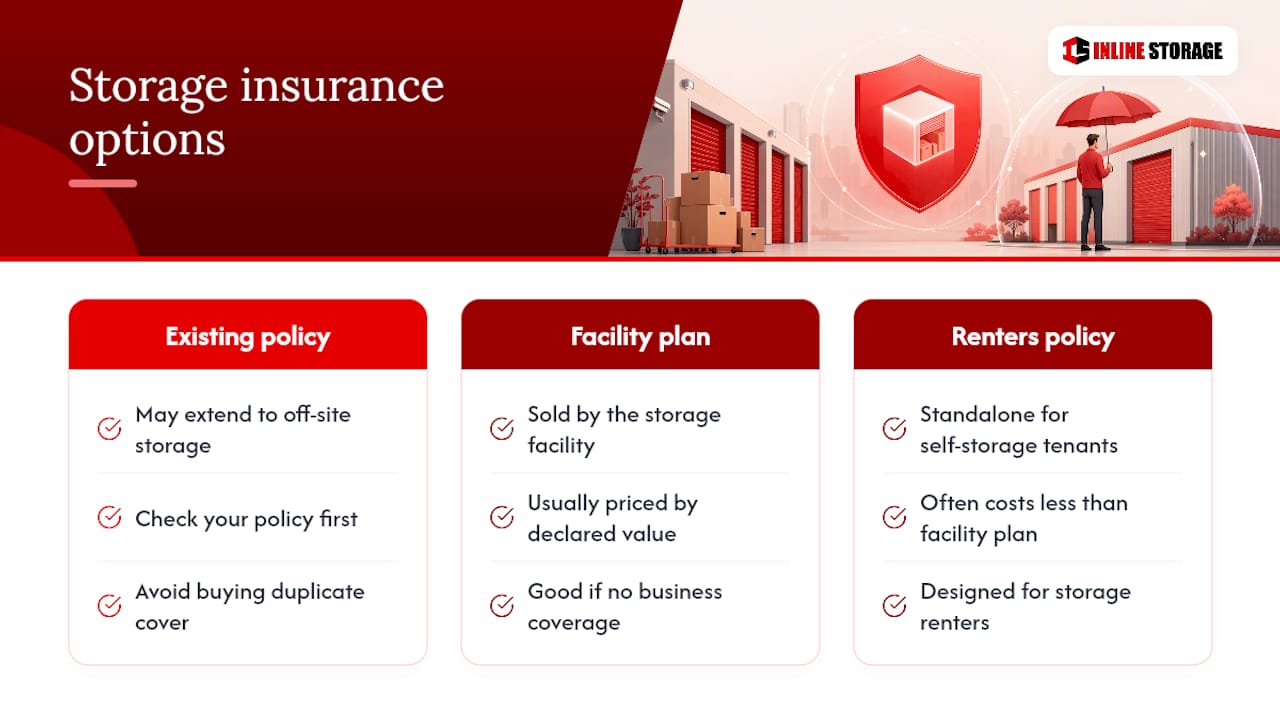
Three paths cover this gap. First, many commercial property insurance policies already extend to off-site storage. Check your existing policy before buying anything new. Second, some facilities sell their own protection plans, usually priced by declared value, which work well if you don't already carry business coverage. Third, standalone renters insurance policies built specifically for self-storage tenants exist and often cost less than a facility's in-house plan.
Whichever route you pick, keep a simple inventory log with photos and approximate values. If you ever file a claim, that log is the difference between a quick payout and a drawn-out dispute over what was actually in the unit. For high-value inventory, ask your insurance provider directly whether their policy has a per-item or aggregate cap, since some policies underpay significantly on electronics or specialty equipment without a rider.
Skipping insurance entirely to save a few dollars a month is the single most common mistake business owners make with storage units, and it's the one that costs the most when something actually goes wrong.
Loading and Unloading: Doing It Right
The biggest time sink in business storage isn't the drive over, it's the loading and unloading once you're there. A few habits fix most of the friction. Back your vehicle in at an angle that keeps the unit door fully clear, not blocked by a bumper. Load heaviest items first and stack toward the back, leaving lighter, frequently accessed items near the door.
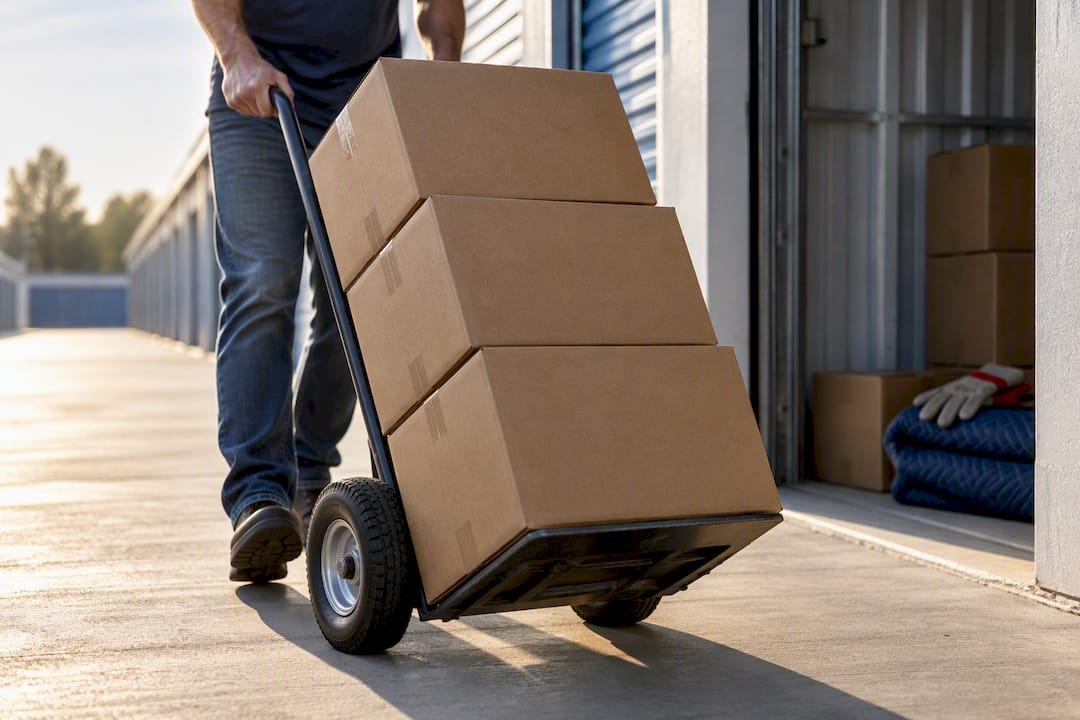
Many facilities offering drive-up access also keep hand trucks or dollies available on-site, either for loan or purchase, which matters if you're moving boxed inventory alone rather than with a crew. Ask about this specifically when you tour, since not every facility stocks equipment, and showing up without one when you're moving fifty boxes solo is a rough afternoon.
If your business regularly receives freight or pallet deliveries, confirm whether the facility has dock-height loading or if everything comes in at ground level. Ground-level access works fine for hand-carried inventory but slows down anything arriving on a pallet jack. Schedule carrier deliveries during hours when staff or kiosk access can confirm the drop-off, so a shipment doesn't sit outside your unit unattended.
How Inline Storage Fits Into Your Storage Search
Inline Storage checks the boxes this guide walks through: Touchless Rentals™ for renting without a site visit, video surveillance and drive-up access for security and logistics, and a size range that covers everything from a 5x5 locker to vehicle and boat storage.
If you've read this far, you already know what to check before signing a lease: security, access hours, insurance requirements, and pricing you can actually see upfront. Inline Storage publishes its unit sizes and features online, so you can compare before you ever pick up the phone. Businesses juggling a fleet or seasonal equipment can check RV storage or boat storage options directly. And if you're scaling operations and need storage that flexes with growth, a resource like Stratton Media Solutions covers the client-acquisition side of that growth.
Ready to move forward? Check current availability and reserve your unit online in a few minutes, no site visit required.
Sources
- Amazon Simple Storage Service (Amazon S3)
- Low Cost, High Performance S3 Compatible Object Storage (Backblaze B2)
FAQ
Can I Run My Business Out of a Storage Unit?
Most storage leases prohibit operating a business or working regularly out of a unit, since facilities are zoned strictly for storage, not commercial activity. You can store inventory, equipment, or supplies there, but running a retail counter or workshop on-site typically violates the lease and local zoning rules.
How Much Does Storage Cost for a Business?
Business storage typically runs $40 to $600 a month depending on unit size, climate control, and vehicle parking needs. Inline Storage's rates vary by unit size with exact pricing listed on its facility page.
Can I Use a Storage Unit as My Business Address?
Generally, no. Storage facilities aren't set up as mailing or legal business addresses, and most leases specifically exclude that use. A registered agent service or virtual office address is the standard workaround for businesses without a traditional storefront.
What Storage Type Is Best for a Business?
It depends on what you're storing: drive-up units suit frequent inventory access, climate-controlled indoor units protect electronics and documents, and outdoor parking fits vehicles and trailers. Match the unit type to your specific use case rather than defaulting to whatever is cheapest.