
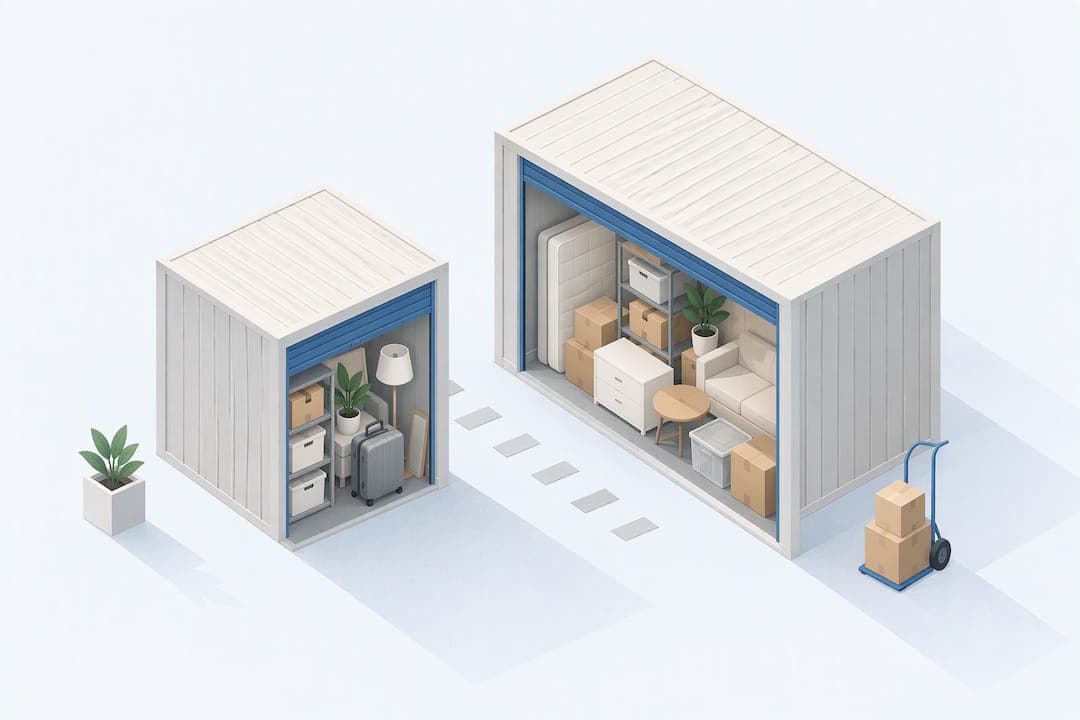
If you live in a small apartment, rent an accessible self-storage unit, typically a 5x5 or 5x10, and reserve climate control for sensitive or long-term items only. Inline Storage and other facilities size units this way because most apartment overflow, seasonal boxes, extra furniture, off-season clothes, fits that range. Before you book anything, measure your largest piece of furniture and jot down a quick inventory. That single step will tell you more about the right unit than any size chart.
TL;DR:
- A 5x5 unit can hold 20 to 25 boxes and a nightstand; choose a 5x10 for a queen mattress, a sofa, and boxes.
- For photographs, documents, wood furniture, instruments, and electronics, choose climate control that manages humidity, especially during storage lasting several months or longer.
- Before signing, inspect the actual unit’s height, columns, door, lighting, and camera coverage, then test the gate code and photograph existing damage.
- Keep costs down by renting the smallest workable unit, using vertical shelving, and checking for move in discounts; prices vary with size, climate control, and local demand.
- Check whether renters or homeowners insurance covers off site storage, because policies may impose sublimits, deductibles, or exclusions; consider facility coverage if gaps remain.
Table of Contents
- How to pick the right unit size for a small apartment
- When to choose climate-controlled storage vs standard units
- Security, access, and convenience features to prioritize
- What storage typically costs and how to save money
- Packing, stacking, and organizing a small-apartment load for max efficiency
- Before you sign: inspection, inventory, and insurance checklist
- Comparison of self-storage vs. portable pods and extra closet rentals
- Step-by-step process for renting a storage unit online with Touchless Rentals™
- Local considerations for South San Antonio residents
- Author perspective: practical advice for small-apartment renters
- Inline Storage: a practical option for small-apartment renters
- FAQ
- Sources
How to pick the right unit size for a small apartment
A 5x5 unit works like a large closet: it holds a few dozen boxes, a couple of small chairs, or seasonal items for a one-bedroom. Step up to a 5x10 and you have room for a queen mattress set, a sofa, and several boxes, roughly the overflow from a one or two-bedroom apartment. A 10x10 fits the contents of a two-bedroom apartment, including major furniture, when you need to store nearly everything during a move or renovation.

Listed square footage is only part of the story. Ceiling height, support columns, and door clearance all affect how much you can actually fit, especially in older buildings, so it's worth walking the unit before you commit.
Before you rent, run through this short checklist:
- Make a quick inventory of what needs to leave your apartment.
- Measure your largest item, usually a couch, mattress, or dresser.
- Sketch a rough layout with a walking aisle down the middle.
- Pick the smallest unit that stays usable, not just the one with the most raw square footage.
A 5x5 unit can realistically hold 20 to 25 boxes plus a nightstand, which gives you a concrete benchmark when you're deciding between sizes. For a closer look at how drive-up sizes from 5x5 through 10x30 match typical apartment moves, comparing your inventory against those examples beats guessing.
When to choose climate-controlled storage vs standard units
Climate control and temperature control aren't the same thing. Temperature control simply keeps a unit from swinging into extreme heat or cold. True climate control adds humidity management, usually through a dehumidification-equipped HVAC system, which matters most for anything that can warp, mildew, or crack under swings in moisture rather than just temperature, according to industry coverage comparing the two.
Items that benefit most from climate control include:
- Photographs, documents, and books prone to warping or mold.
- Antique or wood furniture that can crack with humidity swings.
- Musical instruments sensitive to temperature and moisture.
- Fabrics, leather goods, and electronics stored for an extended period.
One regional pattern worth knowing: facility managers report that climate-controlled units often fill first in certain markets, largely because renters use them for photos, antiques, clothing, and bedding. That demand pattern is a useful signal that these units serve a real need, not just an upsell.
A simple rule: choose climate control when you're storing sensitive items or renting for several months or longer. For short-term, everyday apartment overflow, a standard unit usually does the job. If you're unsure a facility's "climate-controlled" label means much, ask for humidity logs or details on the dehumidification system before paying extra.
Security, access, and convenience features to prioritize
A unit is only as good as the facility around it. When comparing options, prioritize these features in order:
- Gated entry with a working access code system.
- Video surveillance covering entrances, hallways, and the unit rows themselves.
- Drive-up access if you're moving heavy furniture or frequent loads.
- A 24/7 kiosk or staffed office for questions and after-hours access.
- Clearly posted gate hours that match when you actually need to get in.
Accessibility involves trade-offs. Drive-up units save your back but usually cost a bit more than indoor units reached by elevator or stairs. If you're on a tight apartment schedule and plan to swap items in and out often, ground-floor or drive-up access is worth the premium.
Before signing, walk the property and test the gate code, check that cameras actually cover your unit's row, inspect the roll-up door for rust or sticking, and look for general upkeep, cracked pavement, burned-out lights, overflowing dumpsters, that hints at how well the facility is maintained. A quick accessibility and touchless-renting checklist can help you compare facilities on these points side by side.
What storage typically costs and how to save money
Price depends mainly on unit size, whether the unit is climate-controlled, how much demand the local market has, and any current promotions. Climate control typically adds a premium over a standard unit of the same size, so it's worth paying only when your items actually need it.
A few practical ways to keep costs down:
- Rent the smallest unit that still lets you move around and reach your stuff.
- Add vertical shelving so you use height instead of renting more floor space.
- Watch for first-month or move-in discounts, which can meaningfully cut your early costs.
- Ask specifically about month-to-month leases so you're not locked into a long term you don't need.
Pro Tip: Before you commit to a bigger unit "just in case," pack a test load of your actual boxes into a taped-off floor outline at home. It's a five-minute reality check that often saves you a size upgrade.
Packing, stacking, and organizing a small-apartment load for max efficiency
Getting the most out of a small unit comes down to a few habits:
- Use uniform, stackable boxes instead of mismatched bags and bins, they stack straighter and protect contents better.
- Label every box on at least two sides so you can read it no matter how it's stacked.
- Wrap sensitive items in plastic and padding, especially anything going near the door or outer wall.
- Disassemble furniture where possible and store flat pieces upright along the walls to free up floor space.
- Leave a walking aisle and keep the boxes you'll need most often near the front.
Common mistakes that turn a small unit into a frustrating one include stacking boxes floor to ceiling with no path through, skipping measurements on bulky items like a sectional or wardrobe, and storing electronics or instruments in a standard unit without considering humidity. For a full walkthrough on protecting items while maximizing space, these packing steps cover airflow and moisture prevention in more detail.
Pro Tip: Store your most-used seasonal items, like holiday decorations or off-season clothes, in clear bins near the door so you're not unpacking half the unit to find them.

Before you sign: inspection, inventory, and insurance checklist
A few minutes of diligence before you sign protects you later. Walk the actual unit, not just a similar one down the row, and check these points:
- Measure ceiling height and note any columns or support beams that eat into usable space.
- Photograph the unit's condition, floor, walls, door, before you move anything in.
- Confirm whether your renters or homeowner insurance covers off-premises storage, since many policies carry sub-limits or exclusions that make facility-offered coverage worth considering.
- Ask about month-to-month availability, required notice period, late fees, and posted access hours.
- Check how long the facility retains security camera footage, in case you ever need it.
Finish by writing a dated inventory list and keeping the move-in photos somewhere you can find them later. That record is the easiest way to resolve a dispute if one ever comes up.
Comparison of self-storage vs. portable pods and extra closet rentals
Self-storage units, portable storage pods, and renting extra closet space from another tenant are the three options most apartment renters consider, and each fits a different situation.
A self-storage unit gives you a fixed, secured space you can access on your own schedule, with security features like gated entry and cameras built into the property. You handle the move yourself or hire help, but you control when and how often you visit.
A portable pod gets dropped at your curb, you load it at your own pace, and then it's hauled away to a storage yard or to your new address. That convenience helps if parking or stairs make multiple trips to a facility impractical, but pods are typically more exposed while sitting on a street or driveway, and you lose the drive-up access and on-site surveillance a storage property offers.
Renting a spare closet or room from another person is usually the least secure option. There's rarely a lease, insurance coverage, or any security infrastructure behind it, and access depends entirely on someone else's schedule.
For most apartment renters who want predictable access, visible security, and a real lease with clear terms, a self-storage unit is the most consistent choice of the three, which is why it remains the default recommendation in this guide.
Step-by-step process for renting a storage unit online with Touchless Rentals™
Renting online follows a simple process:
- Pick a unit size based on your inventory and the size guidance above, from a 5x5 locker up to a larger 10x20 or 10x30 unit for bigger moves.
- Check availability and any current promotional pricing for that size at your chosen location.
- Complete the rental online through Touchless Rentals™, entering your information and agreeing to lease terms without needing to visit an office first.
- Get ready for move-in by following the instructions provided after completing your rental.
- Load your unit using drive-up access where available.
This process removes the back-and-forth of scheduling an office visit, which matters if you're juggling a move, a renovation, or a tight apartment turnaround. It also keeps interaction minimal for renters who simply prefer a contactless transaction from reservation to move-in.
Local considerations for South San Antonio residents
Texas heat and humidity make climate control a more practical question than a luxury one for certain belongings stored in South San Antonio. Summer heat, combined with humidity swings, is exactly the conditions that stress wood furniture, photographs, instruments, and electronics over a multi-month stay. If you're storing any of those for more than a season, that regional climate pattern is a real argument for paying the climate-control premium rather than an upsell to brush off.
Neighborhood safety is worth weighing alongside climate. A facility with gated entry, consistent lighting, and active video surveillance reduces risk regardless of the surrounding area, and it's worth confirming those features are actually functioning rather than just listed in a brochure. Drive-up access is also a practical plus locally, since loading heavy furniture straight from a vehicle in Texas heat beats carrying it through long indoor hallways.
If you're relocating within South San Antonio, renovating, or need overflow space while between apartments, choosing a facility close to your daily route cuts down on the friction of repeat visits. Proximity matters more than it sounds like on paper: a facility five minutes from home gets used for small trips in a way one across town doesn't.
Author perspective: practical advice for small-apartment renters
In my experience covering self-storage for small-apartment tenants, accessibility and lease flexibility matter more than raw square footage. Renters do better with a smaller, well-organized unit they can get into easily than a bigger one crammed full. Touchless rental options also remove a real friction point: when you're already juggling a move or a tight schedule, skipping the office visit is a genuine convenience, not just a gimmick.
— Ian
Inline Storage: a practical option for small-apartment renters
For apartment renters who want to book a unit without a site visit, we built Touchless Rentals™ so you can reserve and move in without the back-and-forth of an office appointment. Our self-storage units range from compact lockers and 5x5 spaces up through 5x10, 10x10, 10x15, and larger 10x20 and 10x30 units, so you can match the size to your actual inventory instead of overpaying for space you won't use.

Climate-controlled options are available for anything sensitive to heat and humidity, and video surveillance and drive-up access are available for added security and easy loading. Our 24/7 contactless kiosk offers contactless service, and month-to-month leases mean you're never locked into more time than your move or renovation actually needs. Check current unit availability and sizes to find the right fit for your apartment.
FAQ
What size storage unit do I need for a studio or one-bedroom apartment?
A 5x5 unit typically holds around 20 to 25 boxes plus a small piece of furniture, which covers most studio overflow. If you're storing a mattress, sofa, or several large furniture pieces from a one-bedroom, a 5x10 usually fits better.
Is climate-controlled storage worth it for apartment items?
Climate control is worth it mainly for sensitive items like photos, antiques, instruments, and fabrics, or for anything stored longer than a few months. For everyday boxes and seasonal items stored short-term, a standard unit is usually enough.
Does my renters insurance cover items in a storage unit?
Some renters and homeowner policies extend limited coverage to off-premises storage, but many include sub-limits, deductibles, or exclusions. Check your policy's specific terms before relying on it, and consider facility-offered coverage if gaps exist.
How much does a small storage unit typically cost?
Pricing depends on unit size, climate control, and local demand, so costs vary by facility and location. Renting the smallest workable size, watching for move-in promotions, and confirming month-to-month terms are the most reliable ways to keep costs down.
Can I rent a storage unit without visiting the facility in person?
Yes, with Touchless Rentals™ you can select a unit size, check availability, and complete your lease online. It's built for renters who want to skip the office visit entirely.
Sources
- Temperature Control vs. Climate Control
- Data Spotlight: Climate Control - Self Storage Association News / Blog | Self Storage Association