
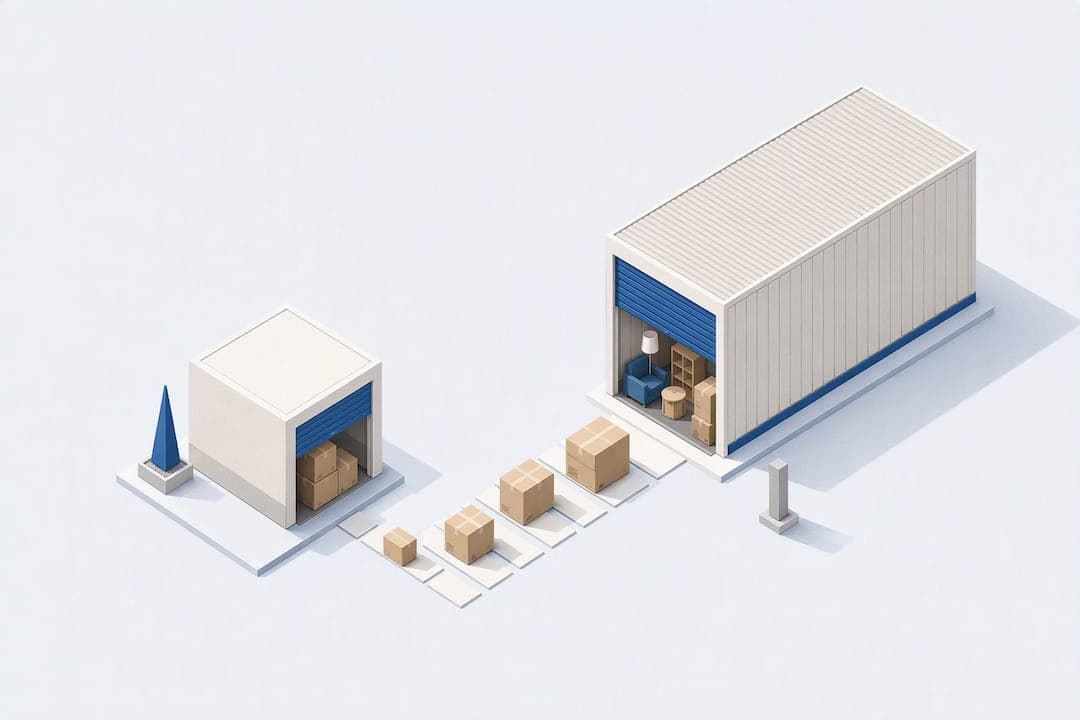
Drive-up storage is a ground-level unit you can pull a vehicle up to for easy loading and unloading. It works best for movers, contractors, RV and boat owners, and anyone handling bulky or heavy items who want to skip elevators, stairs, and long hallways. The main payoff is speed: you park, open the door, and start loading.
TL;DR:
- Drive-up units are ideal for quick loading and unloading, especially for bulky or heavy items, by allowing direct vehicle access to the unit.
- They require sufficient aisle width and height for vehicle maneuvering and are more exposed to weather conditions than indoor units with climate control.
- Safety can be maintained through gated access, surveillance, quality locks, and proper inventory documentation, though they are inherently more susceptible to temperature swings and moisture.
- Prices vary widely depending on unit size, location, features like climate control, and seasonal demand, with smaller units starting around typical market reference points.
- Choosing the right unit depends on the stored item's sensitivity and access frequency, with long-term electronics or documents benefiting more from indoor climate-controlled options.
Table of Contents
- How drive-up access differs from indoor units
- Why people choose drive-up units and when they don't
- Picking the right size and what it costs
- How to choose a drive-up facility: a checklist
- Keeping belongings safe in a drive-up unit
- Loading tips that make the most of drive-up access
- Inline Storage: a real example of drive-up convenience
- Choosing between convenience and protection
- Reserve a drive-up unit with Inline Storage
- Sources and pages worth checking
- FAQ
How drive-up access differs from indoor units
A drive-up unit sits at ground level with a roll-up door that opens directly onto a driving aisle, so drive-up storage units allow a vehicle to park directly in front of the unit for loading and unloading, which makes them well suited to large or heavy items. There is no elevator, no narrow interior hallway, and no waiting for a cart.

That layout comes with trade-offs. Vehicle clearance matters: the aisle needs enough width and height for a moving truck or trailer to maneuver, and the unit sits closer to outdoor temperature swings and humidity than an indoor bay does. Many facilities offset this with covered aisles or canopies over the unit fronts, which cut down on direct sun and rain exposure while keeping the vehicle access intact. Indoor, elevator-access units trade that convenience for tighter climate control and less exposure, which matters more for certain belongings than others.

Why people choose drive-up units and when they don't
Convenience is the main draw. Loading a couch, a stack of tires, or a truckload of moving boxes takes far less effort when you can back a vehicle right up to the door instead of wheeling everything through a building.
Common situations where drive-up access pays off include:
- Moving day: load or unload a truck in one trip without hallways or elevators.
- Home renovations: store furniture and fixtures while work is underway, then swap items in and out as needed.
- Business inventory: contractors and small businesses can grab tools or stock quickly between jobs.
- Vehicle, RV, or boat storage: pull in and out without navigating tight indoor corridors.
- Seasonal gear: holiday decorations, patio furniture, and sports equipment that only need occasional access.
Indoor climate control becomes the better call when you are storing electronics, wood furniture, photographs, or documents for months at a time, since those items are more sensitive to heat, cold, and humidity swings than a folding table or a box of holiday lights.
Picking the right size and what it costs
Unit sizes generally run from small lockers up to garage-sized bays, and matching size to contents is the first step in avoiding wasted rent. Typical self-storage unit sizes commonly include 5x5, 5x10, 10x10, 10x20, and 10x30, and a 10x20 often fits the contents of a one- to two-bedroom apartment or a car's worth of furniture.
- 5x5: seasonal boxes, small furniture, or a closet's worth of belongings.
- 10x10: a studio or one-bedroom apartment's furniture and boxes.
- 10x20: a full household move, a vehicle, or a garage's worth of tools and equipment.
Drive-up units are commonly paired with features like covered aisles that reduce weather exposure, which is one reason facilities price them close to comparable indoor space. Price depends on the local market, unit size, whether the unit is indoor or drive-up, whether it includes climate control, and the time of year you rent, since demand tends to rise during peak moving months. Prices vary widely depending on location and features such as climate control and promotions, so specific monthly costs for a 10x20 unit vary by market. Those variables, not the base size alone, usually explain the spread between quotes.
How to choose a drive-up facility: a checklist
Once you know your size, compare facilities on the details that affect day-to-day use.
- Confirm access hours and how the gate system works, and check whether the facility offers kiosk or online rental for after-hours moves.
- Measure your vehicle or trailer against the drive aisle width and door height listed for the unit.
- Look for video surveillance, gated entry, and lighting across the drive-up aisles, not just at the front office.
- Ask about move-in fees, lease length, current promotions, and whether tenant insurance is required or offered.
- Weigh customer service responsiveness and extras like packing supplies or climate-controlled options for sensitive items.
Pro Tip: Call or check online for the exact drive aisle width and door clearance before committing to a unit if you plan to store an RV, boat, or full-size truck.
Keeping belongings safe in a drive-up unit
Security concerns are reasonable given the ground-level access, but the right lock and the right facility features close most of the gap. Security elements to check include gated access, video surveillance, on-site management, and adequate lighting, and renters are also advised to use high-quality disk or cylinder locks rather than standard padlocks, which are easier to defeat.
- Use a disk or cylinder lock rather than a basic padlock.
- Choose a facility with cameras covering the drive-up aisles, not just the entrance.
- Drive-up units expose stored items to more temperature swings and moisture risk than indoor units, so keep boxes on pallets and use sealed bins for anything moisture-sensitive.
- Photograph your inventory and keep a list for insurance purposes, since many operators require or offer tenant coverage.
For higher-value items in transit to the unit, the security practices used during expensive item transport apply just as well once those items are sitting in storage.
Loading tips that make the most of drive-up access
Position your vehicle so the cargo door lines up with the unit entrance, then load heavy and rarely needed items first, toward the back, with everyday items near the front where you can reach them without unpacking the whole unit.
- Load heavy boxes and furniture first, lighter items on top.
- Keep pallets under boxes and use covers on furniture to guard against moisture and dust.
- Label every box on the side facing the aisle, and leave a walkway down the middle.
- Use a dolly or ramp for anything too heavy to carry, especially with a raised threshold.
Pro Tip: If you are storing short-term, stack loosely for quick access; for long-term storage, pack tighter and use covers, since you will be opening the door less often.
Inline Storage: a real example of drive-up convenience
Inline Storage runs drive-up units alongside video surveillance, gated entry, and 24-hour kiosks, with a Touchless Rentals™ system that lets customers rent online with minimal in-person contact. The company states pricing starts at an amount that provides a reference point for what a small drive-up unit can cost before size, climate control, and promotions are factored in.
Choosing between convenience and protection
Drive-up storage wins on speed and ease, but it is not automatically the right call for every item. If you are moving furniture, tools, or seasonal gear you will access often, take the convenience. If you are storing electronics, documents, or anything sensitive to heat and humidity for the long haul, climate control usually matters more than curbside access.
— Ian
Reserve a drive-up unit with Inline Storage
Inline Storage covers the checklist most drive-up renters care about: ground-level access, gated entry, video surveillance, 24-hour kiosks, and a Touchless Rentals™ system for booking without an in-person visit, with pricing starting at an amount you can find on their website.

You can browse available sizes and reserve online through the self-storage units page, or check the South San Antonio facility page for specific unit details. If you're storing a vehicle, the RV storage page covers vehicle-specific access needs. Reservations can be completed online or at the on-site kiosk, so you can lock in a unit before moving day arrives.
Sources and pages worth checking
For local pricing and unit availability, start with the Inline Storage landing page or the 11 reasons for self storage page for use-case comparisons. For packing fragile or oddly shaped items, Kitchen Devotion's storage tips offer techniques that carry over well to a storage unit.
FAQ
What does drive up mean in storage?
Drive-up means the unit sits at ground level with a door that opens onto a driving aisle, so you can park a vehicle right in front to load or unload. It skips elevators and long interior hallways entirely.
Are drive-up storage units safe?
Drive-up units can be just as safe as indoor units when the facility offers gated access, video surveillance, and good lighting across the drive-up aisles. Renters should also use a quality disk or cylinder lock and document their inventory for insurance purposes.
What is the average cost of a 10x20 storage unit?
Cost varies by market, whether the unit is indoor or drive-up, climate control, and the season you rent, so there is no single national figure. Facilities often run promotions, so it's worth asking about current move-in offers and how long a quoted price is guaranteed.
Who is the cheapest self storage?
Pricing depends heavily on your local market and the specific unit size and features you need, so there is no single cheapest provider everywhere. Inline Storage lists pricing starting at an amount that is a useful reference point when comparing local options.