
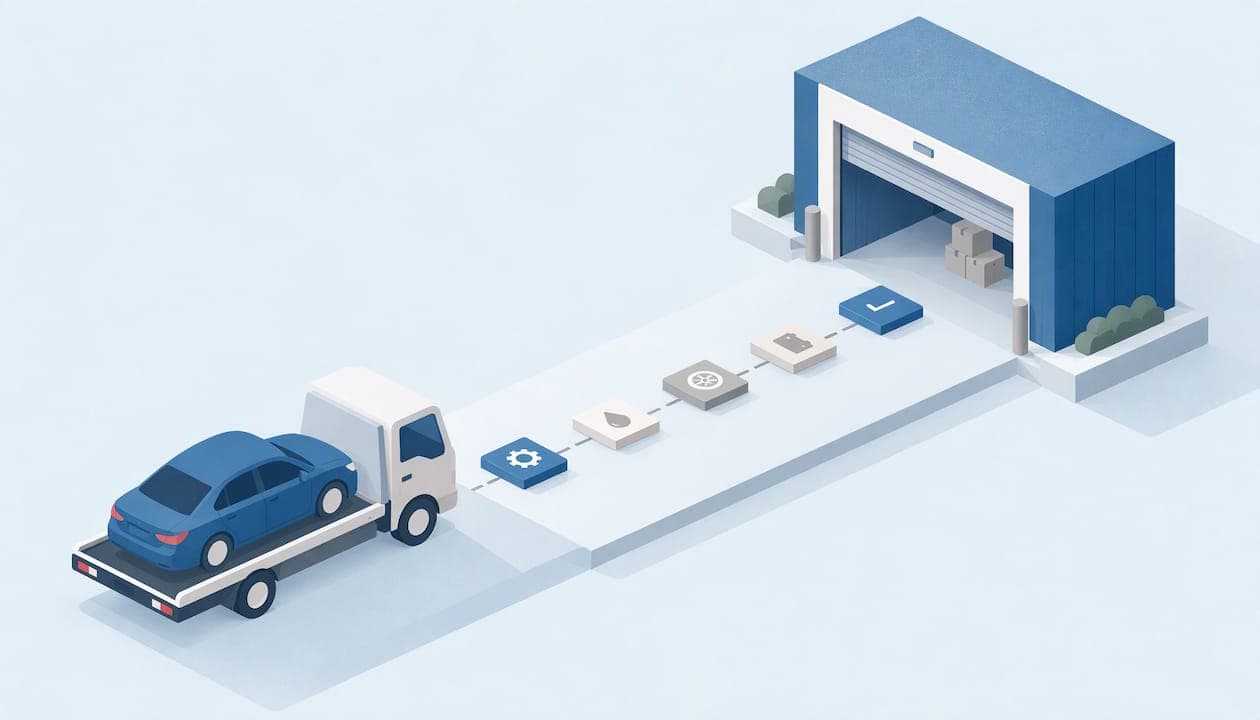
Yes, you can store a car in a storage unit at many facilities, but the answer depends on the site's layout, local fire and insurance rules, and its own policy. Expect to show current registration, valid plates, and proof of insurance. Mechanical work is off limits and the car must be leak-free. A 10x20 unit fits most standard cars, according to ConsumerAffairs.
TL;DR:
- Facilities commonly require current registration, valid plates, proof of insurance, and an operable car without leaks; fuel rules vary, so confirm them with the manager.
- A 10x20 fits most standard cars; compact cars may fit 10x15, while larger trucks or SUVs often need 10x25 or 10x30, plus door clearance.
- Climate controlled indoor storage suits classics and high value cars; ordinary cars stored for a few months can use a clean, dry covered space.
- Insurance requirements vary: some facilities require active coverage, while insurers may allow reduced policies, so confirm facility rules and state registration requirements before changing coverage.
Table of Contents
- What decides whether a facility accepts your car
- Which storage type and unit size fits your car
- What it costs to store a car
- How to prepare your car for storage
- Paperwork and insurance when you arrive
- Keeping the car healthy over a long stay
- What most facilities don't allow
- Why I tell people to measure and photograph first
- Store your car with us
- FAQ
- Sources
What decides whether a facility accepts your car
Two things decide the answer: the building and the paperwork. Most self-storage sites were built and permitted as storage space, not as repair garages. That classification shapes what the property's insurance covers and what local fire and safety codes allow. A site that is fine with a sedan in a ground-level unit may turn away the same sedan if the unit sits in an interior corridor with no vehicle access.
Fire codes are the biggest reason. A vehicle carries fuel, oil, coolant, and a battery, and codes often regulate how much of that can sit inside a building. Because sites are not zoned for repairs, managers have to prohibit anything that creates sparks, heat, fumes, or volatile liquids. That is why you will see the same rule at almost every facility: park it, cover it, leave it alone.
ConsumerAffairs reports that car storage is available at many self-storage facilities but that policies differ by location. That matches what we see day to day. Two sites a few miles apart can have different rules, so a phone call or a message to the manager beats any general guide, including this one.
Here is what managers commonly check before they let a vehicle into a unit:
- Current registration. It shows the car is legally yours and street legal.
- Valid license plates. Some sites refuse vehicles with missing or expired plates.
- Proof of insurance. Many facilities want to see an active policy on the vehicle.
- A driver's license or state ID. This is standard for any rental.
- Title or proof of ownership. Some managers ask for this, especially for older or unregistered vehicles.
Fuel policies are less uniform. Facilities must comply with local fire codes, and those codes often strictly regulate storing vehicles with fuel. Some managers want the tank nearly empty, while others ask for a full tank to limit condensation. Ask before you fill up or drain anything.
Most managers also expect the car to be operable and leak-free. If your car is on blocks, missing plates, or not running, ask directly whether that is allowed. A "no" at this stage costs you a phone call. A "no" after you have towed the car costs you a lot more.
Which storage type and unit size fits your car
Storage for vehicles comes in several forms, and the right one is a trade between price and protection. Moving describes vehicle storage as similar to renting a garage or a parking space, and advises choosing the type based on the protection you need and your budget.
- Outdoor parking. An open space, usually the cheapest. The car faces sun, rain, and temperature swings.
- Covered parking. A roof but no walls. It blocks direct sun and hail but not wind-blown dust or humidity.
- Indoor enclosed unit. A closed unit with a door. It keeps weather, dirt, and prying eyes away.
- Climate-controlled unit. An indoor unit that holds a steadier temperature and humidity.
State Farm describes the same three storage types of outdoor, covered, and indoor, and says indoor climate-controlled units are best for classic or high-value cars. Edmunds makes a similar point: indoor, drive-up climate-controlled units protect better against UV, humidity, and temperature-related wear than outdoor parking, and the car's value should guide how much you spend on that protection. A daily driver parked for a few months rarely needs the premium option. A restored coupe does.
Matching your car to a unit size
ConsumerAffairs notes that a 10x20 unit fits most standard cars, compact cars may fit in a 10x15, and larger trucks and SUVs typically need a 10x25 or 10x30. Use that as a starting point, then check your own numbers. If you are shopping for a long vehicle, our guide to the 10x30 storage unit size shows what the footprint and capacity actually look like.
Measure these before you book:
- Overall length, bumper to bumper, including any hitch or rack.
- Overall width, including mirrors, since mirrors are often the widest point.
- Height, including roof racks or antennas.
- Door opening width and height of the unit, which is always smaller than the room inside.
- Extra room so you can open a door and walk around the car without scraping it.
A car that technically fits with an inch to spare will be a daily frustration. Give yourself room to open the driver's door fully. If you plan to visit the car, that matters more than saving a few dollars on size.
Access features worth prioritizing
Drive-up access is the feature that makes vehicle storage workable. A ground-level unit with a roll-up door lets you drive straight in. An interior corridor unit may have tight turns, a low ceiling, or an elevator that cannot take a vehicle. Also ask about the turning radius at the unit door and the driveway width. Our overview of drive-up storage sizes explains how ground-level units work and which sizes suit different needs.

Pro Tip: Back your car into the unit if the driveway allows it. You will pull out nose first, which is safer and easier after a long stretch of storage.
What it costs to store a car
Price depends on a handful of factors, and no single number fits every market. The main drivers:
- Unit size. A 10x25 costs more than a 10x15 because it takes more floor space.
- Type of space. Outdoor is generally the lowest, covered sits in the middle, and indoor and climate-controlled are higher.
- Climate control. Controlled humidity and temperature add to the monthly rate.
- Security features. Gated entry, video surveillance, and good lighting often show up in the rate.
- Local demand. A busy area with few vacancies prices higher than a quiet one.
Compare apples to apples. Ask each facility for the month-to-month rate on a 10x20 in two versions: outdoor or covered, and indoor or climate-controlled. That gives you a clean comparison across sites instead of a pile of mismatched quotes.
Then ask about the extras that can change the real monthly cost:
- Administrative or setup fees at move-in
- Deposits
- Minimum rental periods
- Vehicle-specific parking fees, which some sites charge
- What the monthly rate includes, such as access hours, surveillance, and gated entry
- Whether your insurance or paperwork adds any cost
For sizes like the 10x15 and 10x20, check our site for current pricing and compare the unit against the vehicle you actually own. If you want a second layer of reassurance on the security side, the question of whether your car is protected comes down to what you can verify. Our renter checklist on whether storage units are safe walks through asking for surveillance footage and checking the gate and lighting.
ConsumerAffairs reports that a 10x20 unit fits most standard cars, and that size is the one we suggest you quote first.
A 10x20 unit fits most standard cars, according to ConsumerAffairs. That is why we suggest you start your price comparison there: it gives you a useful benchmark across facilities.
How to prepare your car for storage
Do these in order. Each step protects the next one, and the time required depends on the car and the work needed. For a stay of a few weeks you can shorten the list. For several months, do all of it.
- Wash and dry the car. Clean the exterior to remove dirt, bird droppings, and road salt that can damage paint over time. AAA recommends washing and waxing the exterior before an extended stay. Let the car dry completely so you do not trap moisture.
- Clean the interior. Vacuum the seats and floor, and remove food, wrappers, and anything that smells. Crumbs attract mice and insects. Take valuables and important papers with you.
- Fix any leaks and document the car. A leaking car is a problem for you and for the facility. Repair it first. Then take dated photos of every side, the interior, and the odometer, and write down the VIN and mileage.
- Care for the battery. For long stays, connect a battery maintainer (a trickle charger) if the unit has power, or disconnect the battery. For medium-length stays, a periodic start helps, if the facility allows running an engine, which many do not. Ask first.
- Set the tire pressure. AAA advises adding 10 psi to reduce flat spots on the tires. Moving the car now and then also helps. Jack stands are an option for extended storage, but AAA says to use them only if you know the correct lift points, and some facilities do not allow vehicles on stands, so confirm that first.
- Handle fuel and fluids. Meet the facility's fuel policy, whether that means topping off or keeping the tank low. For storage lasting several months, consider fresh oil and a service following your manufacturer's guidance. Do the work at home or at a shop, never in the unit.
- Skip the parking brake. AAA advises against using the parking brake for long-term storage. Leave the car in gear (or park for an automatic) and use wheel chocks instead, since brake pads can stick to rotors over time.
- Control moisture and pests. Place desiccant packs inside the cabin. AAA suggests desiccants if the car will be exposed to moisture. Seal obvious entry points such as the exhaust tip and air intake with steel wool or a plug (remember to remove them later), and walk the unit perimeter to check for gaps rodents could use.
- Cover the car. Use a breathable car cover. Plastic tarps trap moisture and can scratch the finish.
- Lock up and note the details. Record your unit number, gate code, and the date you stored the car.
Pro Tip: Put a bright note on the steering wheel listing every step you took, such as "battery disconnected, steel wool in exhaust." It saves you from a surprise when you return.
Paperwork and insurance when you arrive
Showing up with the right documents is the easiest way to avoid a denied lease. Plan to bring:
- Current vehicle registration
- Valid license plates mounted on the car
- Proof of insurance
- Your driver's license or state ID
- The title or other proof of ownership, if the manager asks
Handling insurance while the car sits
Insurance is where people get caught. State Farm notes that some owners can adjust coverage for stored vehicles, such as suspending liability and collision while keeping comprehensive, but you must confirm this with your insurer and check DMV rules. State laws can affect registration and insurance requirements, so a change that is allowed in one state may not be in another.
That creates a real tension. Some facilities want proof of active insurance on the vehicle. Others are fine with a reduced policy. Do not guess. Call your insurance company, explain how long the car will be stored, and ask exactly what you can change and what you must keep. Then tell the storage manager what you plan to do and ask whether it meets their requirements.
Also keep in mind that insurance on the car is separate from coverage for the contents of a unit. If you will store other belongings alongside the car, our article on storage unit insurance and off-premises limits explains why getting the limit in writing matters.
A short call list to finish before move-in day:
- Ask your insurer which coverages you can lower and which you must keep.
- Ask whether your state's DMV has registration or insurance rules for stored vehicles.
- Ask the facility manager for their written minimum insurance requirement.
- Save written confirmation of both answers.
Keeping the car healthy over a long stay
The longer a car sits, the more small problems stack up. A simple routine prevents most of them.
Battery. A maintainer is the best option for long stays. Where engine starts are allowed, a periodic start can help for medium-length storage, but short idling does not fully recharge a battery. If the battery is dead when you return, a jump start often works, but a battery that sat fully drained for months may not hold a charge and could need replacing.
Tires. Flat spots happen when a tire sits in one position under weight. Extra air pressure, as AAA suggests, and occasional movement reduce the risk. If you see flat spotting or cracked sidewalls when you return, mild flat spots often fade after driving a few miles, but visible cracking means the tire should be inspected by a professional before you drive at speed.
Rodents and moisture. Look for droppings, chewed wires, nesting material, or a musty smell. Short-term fixes include removing nests, airing out the cabin, and replacing desiccant packs. Chewed wiring or a persistent odor is a job for a mechanic, because damaged wires can cause electrical faults or fires.
Here is a return checklist for when you pick the car up:
- Check the brakes, since rotors can develop surface rust. Pump the pedal and test gently at low speed.
- Check fluid levels and look under the car for new leaks.
- Test the battery and the lights, including turn signals and brake lights.
- Inspect tire pressure and condition.
- Remove any steel wool or plugs from the exhaust and intake.
- Check under the hood for nests or chewed hoses.
Pro Tip: Drive the first few miles slowly and avoid highway speeds until the brakes, tires, and steering feel normal. Stored cars often need a short shake-out drive.
What most facilities don't allow
Most lease violations are accidents, and they usually come from doing something at the unit that belongs at a garage. The common rules:
- No mechanical work. Fluid changes, repairs, and any task involving sparks, fumes, or volatile flammable liquids are almost universally prohibited. The unit is zoned as storage, and that activity raises fire and liability risk.
- No welding, grinding, or open flame. These are broadly enforced for safety and insurance reasons.
- Leak-free vehicles only. A leaking car can lead to lease termination and charges for cleanup.
- Limits on commercial or oversized vehicles. Policies vary on trucks with commercial plates and on very tall or long vehicles.
- Rules on jack stands. Some sites allow them and some do not, so check before you lift the car.
If you have an RV or a boat, those have their own dedicated spaces rather than standard units, and we cover them on our RV storage and boat storage pages.
Why I tell people to measure and photograph first
After watching people move vehicles into storage, I keep coming back to three small habits. Measure your car before you call anyone. Photograph its condition so there is no argument later. And find out the registration and insurance requirements before you drive over, not after. Those three steps prevent most of the wasted trips.
We lean toward drive-up units and Touchless Rentals™ for vehicles because they cut the friction: you can drive in and book online with minimal contact. On protection, be honest with yourself. Climate control is worth it for a classic or a high-value car. For an ordinary car stored a few months, a clean, dry, covered or indoor spot with good prep does most of the job.
— Ian
Store your car with us
We can help you get a car off the street and into a secure space, with a contactless way to book it. Here is what is relevant to vehicle storage:
- Drive-up access to ground-level units
- Unit sizes from 10x15 up to 10x30, including a 10x20 unit for most standard cars, a 10x15 for compact cars, and a 10x30 for long vehicles
- Climate-controlled storage for cars that need steadier conditions
- RV and boat storage for larger vehicles
- Gated entry and video surveillance
- Touchless Rentals™ so you can book online with minimal contact

Compare your vehicle's measurements to the unit pages above, then contact our team to confirm the vehicle policy and the documents we need before you book. When you are ready, check availability online or use our contactless kiosk, and bring your registration, plates, proof of insurance, and ID. You can also browse all of our self-storage units to pick a size.
FAQ
What is not allowed in a storage unit?
Most facilities prohibit mechanical work, fluid changes, welding, and anything that creates sparks, fumes, or volatile liquids. Leaking vehicles are also commonly banned. Rules vary by site, so confirm with the manager before you move anything in.
Is it illegal to work on a car in a storage unit?
It is not usually a matter of criminal law, but it is almost always a lease violation. Facilities are zoned as storage rather than repair garages, so repairs and fluid changes raise fire and liability risk. Doing them can end your lease and leave you paying for cleanup.
What is the cheapest way to store a car?
Outdoor parking is generally the lowest-cost option, though it offers the least protection from sun and weather. Ask each facility for its month-to-month rate on the same size of space so you can compare fairly. Match the protection level to your car's value, as Moving.com advises.
Does a standard car fit in a 10x20 storage unit?
Yes, a 10x20 fits most standard cars, while compact cars may fit a 10x15 and larger trucks and SUVs usually need a 10x25 or 10x30. Measure your car and the door opening before you book so you can open the doors comfortably.
Sources
- Can You Store a Car in a Storage Unit? (2026)
- Tips For When Your Vehicle Is Off-the-Road For An Extended Time Period | AAA Northway
- Preparing for Long Term Car Storage - State Farm®
- Here's How Vehicle Storage Works