
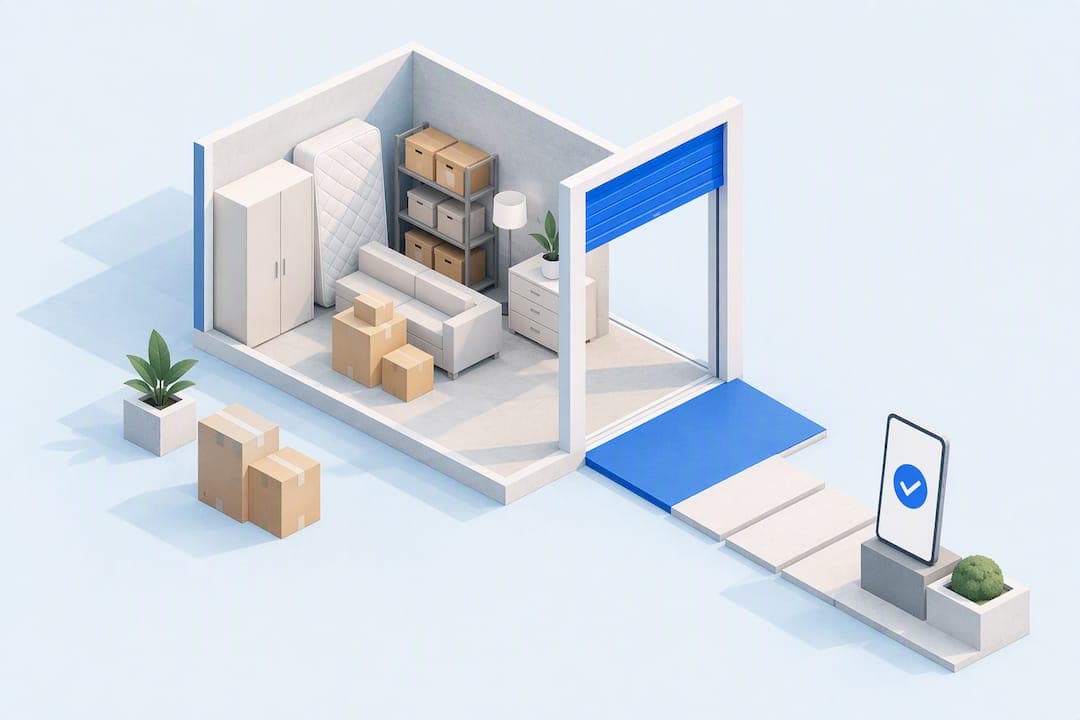
A 10x15 storage unit measures 150 square feet and holds roughly 1,200 cubic feet of space with a standard 8-foot ceiling, enough for the contents of a one- to two-bedroom home or about two-thirds of a one-car garage. This size works well when you're moving bulky furniture, renovating, or staging a home for sale and want enough room to walk in and reach your things without unpacking everything first.
TL;DR:
- A 10x15 storage unit offers about 1,200 to 1,500 cubic feet, depending on ceiling height, which affects how much you can stack vertically.
- Actual capacity depends on door height, support beams, and other features, so measure or inquire about these details before renting.
- This size comfortably stores furniture for a two-bedroom household plus additional boxes or large items, making it ideal for moves or renovations.
- Costs average around $173 per month nationally but vary based on location, climate control, access type, and security features.
- Proper packing and organization, including leaving a 2 to 3-foot aisle and labeling boxes, are key to safe and accessible storage.
Table of Contents
- Exact Dimensions, Volume, and Ceiling-Height Variants
- What Fits: Capacity Examples and an Inventory Checklist
- Common Uses for a 10x15 Unit
- Cost Expectations and What Affects Price
- Packing and Organizing a 10x15 for Safety and Access
- Climate Control and Unit Features: When You Need Them
- Why Inline Storage Fits the 10x15 Use Case
- Author Perspective and a Quick Rule of Thumb
- How to Reserve a 10x15 at Inline Storage
- FAQ
- Sources
Exact Dimensions, Volume, and Ceiling-Height Variants
The math behind a 10x15 unit starts simple: 10 feet by 15 feet equals 150 square feet of floor space. Multiply that by ceiling height and the usable volume changes more than most people expect. At a standard 8-foot ceiling, you get about 1,200 cubic feet; at 9 feet, that climbs to roughly 1,350 cubic feet; at 10 feet, you're looking at around 1,500 cubic feet.
Roll-up doors and bay layout matter too. A lower door height limits how tall you can stack near the entrance, even if the ceiling farther back is taller. Before you commit to a facility, measure or ask about:
- Actual ceiling height, not just the advertised square footage
- Door height and width, since a narrow or short opening limits what furniture fits through
- Support beams or HVAC ductwork that might cut into usable space
- Interior lighting and outlet access if you'll need to work inside the unit
Two units both labeled "10x15" can hold meaningfully different amounts of stuff depending on these details.
What Fits: Capacity Examples and an Inventory Checklist
A 10x15 unit comfortably holds the furnishings of a typical two-bedroom household: a sofa, loveseat, dining table with chairs, a queen bed frame and mattress, a dresser, a few bookshelves, and a washer and dryer, along with a moderate amount of boxes in various sizes. That's Example A, the full-household scenario most movers picture when they search for this size.

Example B skips the smaller boxes and focuses on furniture-only storage, such as during a renovation when you're clearing out a living room and two bedrooms but keeping your kitchenware and clothes with you. In that case, you can stand mattresses on edge, stack chairs seat to seat, and disassemble bed frames to save floor space, leaving more room for larger case goods like armoires or sectional sofas.
A simple loading order keeps both scenarios organized and accessible:
- Place large furniture and appliances along the back wall first.
- Stack disassembled frames and flat items like mattresses against a side wall.
- Build a column of boxes by weight, heaviest on the bottom, lightest on top.
- Leave a center aisle at least 2 to 3 feet wide for walking access.
- Store anything you'll need soon near the door, not buried behind furniture.
Pro Tip: Keep an inventory list on your phone with photos of what's in each box or stack, so you're not reopening containers months later just to find a specific item.
Common Uses for a 10x15 Unit
This size fits a specific range of situations rather than every storage need. It's a strong match when you're:
- Moving between homes and need temporary space for a one- to two-bedroom household's furniture
- Renovating a living room, kitchen, or multiple bedrooms and need to clear the space
- Staging a house for sale by removing excess furniture to make rooms look larger
- Storing seasonal business inventory for a small shop or home-based operation
- Keeping a motorcycle, ATV, or extra sports gear alongside household overflow
Compared to a 10x10 unit, a 10x15 gives you roughly 50% more floor space, useful once you're storing a full bedroom set plus a living room. A 10x20 makes more sense if you're storing a small car, a larger three-bedroom household, or need wider aisles for frequent access. If your inventory is closer to a studio or one bedroom, a smaller unit will save you money without leaving excess empty space.
Cost Expectations and What Affects Price
A 10x15 storage unit averages around $173 per month nationally, though actual rates swing widely based on where you live and which features you choose. This figure is a useful benchmark, not a quote: local market pricing often lands well above or below it.
Several factors push the price up or down:
- Local demand and real estate costs in your area
- Climate control, which typically adds a premium over standard units
- Drive-up access versus indoor, upper-floor units reached by elevator
- Security features like gated entry, cameras, and on-site staff or kiosks
To keep costs down, compare a few local facilities rather than booking the first listing, ask about move-in promotions, and stay flexible on move-in dates since some facilities adjust pricing by season. Dropping climate control or choosing a drive-up unit over an indoor one can also meaningfully lower your monthly rate if your belongings don't need it.
Packing and Organizing a 10x15 for Safety and Access
Loading a 10x15 unit well comes down to sequence and spacing. Start with the heaviest, least-needed items against the back wall, then work forward, finishing with anything you'll need to access regularly near the door. Keep a center aisle of at least 2 to 3 feet so you're never climbing over boxes to reach something.
- Disassemble bed frames, tables, and large furniture before loading to save space and reduce damage risk.
- Label every box on more than one side so you can read it no matter how it's stacked.
- Use pallets or wood planks under boxes near the floor to improve airflow and protect against moisture.
- Stack boxes by weight and size, never placing heavy items on top of fragile ones.
- Leave a few inches of space between stacked items and the walls for air circulation.
Avoid stacking boxes higher than you can safely reach without a stool, and keep stacks away from direct contact with walls to reduce condensation risk. A few moth balls or cedar blocks placed strategically can help deter pests in units without climate control.
Pro Tip: Store a flashlight and a basic toolkit near the door; you'll need both more often than you'd expect once the unit is loaded.
Climate Control and Unit Features: When You Need Them
Climate control matters most for specific items rather than everything you own. Consider it when you're storing:
- Wood furniture, which can warp or crack with humidity swings
- Electronics, photographs, and important documents sensitive to moisture
- Musical instruments, especially those with wood components or strings
- Leather goods, books, and anything prone to mildew in humid climates
Drive-up access adds convenience for frequent loading and unloading, while indoor units often trade that convenience for tighter temperature and humidity control. If you're storing for more than a few months, or your items fall into the categories above, climate control is worth the added cost. For short-term furniture storage during a move, a standard drive-up unit is usually enough.
Why Inline Storage Fits the 10x15 Use Case
For South San Antonio renters sizing up a move or renovation, Inline Storage offers 10x15 units alongside drive-up access, video surveillance, and 24-hour kiosks for contactless check-in. Touchless Rentals™ systems let you reserve and move in without waiting on office hours or in-person paperwork, a real advantage when you're juggling a moving truck and a tight schedule.
Drive-up access means you can pull directly up to your unit instead of hauling furniture through long hallways, which matters most with bulky items like sofas and dressers. Gated entry and ongoing video surveillance add peace of mind for anyone storing a full household's belongings for weeks or months at a time.
Author Perspective and a Quick Rule of Thumb
My rule of thumb: if you can picture fitting a one-bedroom apartment plus a few extra large items into a two-car garage, you need a 10x15, not a 10x10. The most common mistake I see is underestimating ceiling height. Two units with identical floor plans can differ by 300 cubic feet simply because one has a taller roll-up door and clearance.
— Ian
How to Reserve a 10x15 at Inline Storage
Checking availability takes a few minutes through our Touchless Rentals™ system online or at one of our 24-hour kiosks, no office visit required.

Before you book, have these ready:
- Your target move-in date
- Whether you need drive-up access, climate control, or both
- A phone number and email for confirmation and gate-code setup
If a 10x15 turns out to be more space than you need, or you're weighing storage against moving in with roommates to cut costs during a transition, shared housing options are worth a look too. When you're ready, reserve directly through our self-storage units page and get your gate code the same day.
FAQ
How much can I fit in a 10x15 storage unit?
A 10x15 unit typically holds the furniture and boxes from a one- to two-bedroom home, including a sofa, bed, dresser, dining set, and about 25 boxes. Usable capacity depends heavily on ceiling height, which can range from about 1,200 to 1,500 cubic feet depending on the facility.
What can fit in a 10 by 10 storage unit?
A 10x10 unit fits roughly the contents of a one-bedroom apartment: a bed, a couch, a few boxes, and maybe a small dining set, but little extra room for large furniture sets. It's about two-thirds smaller than a 10x15 unit, so it works best for lighter moves or partial-home storage.
What does a 10x15 storage unit look like?
Picture a space roughly the size of two-thirds of a one-car garage, with a roll-up door, concrete or similar flooring, and enough room to walk down a center aisle while furniture lines the walls. Ceiling height varies by facility, which changes how much you can stack vertically.
Should I get a 10x10 or 10x15 storage unit?
Choose a 10x10 if you're storing a one-bedroom apartment's worth of belongings or lighter furniture. Choose a 10x15 if you have a two-bedroom household, oversized furniture, or want enough space to walk in and access items without unpacking the whole unit.